In a constantly changing economic environment, project portfolio management (PPM) is becoming a strategic lever for organizations seeking to maximize the value of their investments. The increase in the number of projects, their growing complexity, and the need to align each initiative with the company’s overall objectives make it essential to implement effective governance. Project portfolio governance aims to coordinate, prioritize, and monitor all initiatives, while ensuring optimal use of resources and consistency with organizational strategy.
This article aims to analyze the central role of governance in project portfolio management. We will explore the fundamental principles of governance, its benefits, the challenges encountered during its implementation, and best practices for establishing appropriate and effective governance. Finally, concrete examples will illustrate the impact of effective governance on the success of project portfolios.
Definition of governance in project portfolio management
Governance in project portfolio management is defined as the set of rules, processes, and structures that govern decision-making, prioritization, and monitoring of projects within a portfolio. Unlike project or program governance, which focuses on individual or grouped initiatives, portfolio governance takes a holistic view, encompassing all of the organization’s strategic initiatives. It aims to ensure that each project contributes to the achievement of the company’s long-term objectives.
Key governance components
The main components of portfolio governance include the following:
- Decision-making structures: steering committees, governance boards, portfolio management offices (PMOs), which oversee and arbitrate major decisions.
- Prioritization process: methods and criteria for selecting and prioritizing projects based on their added value, strategic alignment, and feasibility.
- Resource allocation: mechanisms for allocating human, financial, and material resources according to portfolio priorities.
- Risk management: portfolio-wide risk identification, assessment, and mitigation.
- Monitoring and control mechanisms: performance indicators, dashboards, regular reporting, and feedback loops to ensure continuous improvement.
The role of governance in project portfolio management
Coordination of initiatives
Governance plays a fundamental role in coordinating projects, ensuring that each initiative is aligned with the organization’s overall strategy. It facilitates communication between stakeholders, clarifies responsibilities, and ensures consistency of actions. With well-defined governance structures, organizations can avoid redundancies, optimize synergies, and ensure that efforts are focused on strategic priorities.
Project prioritization
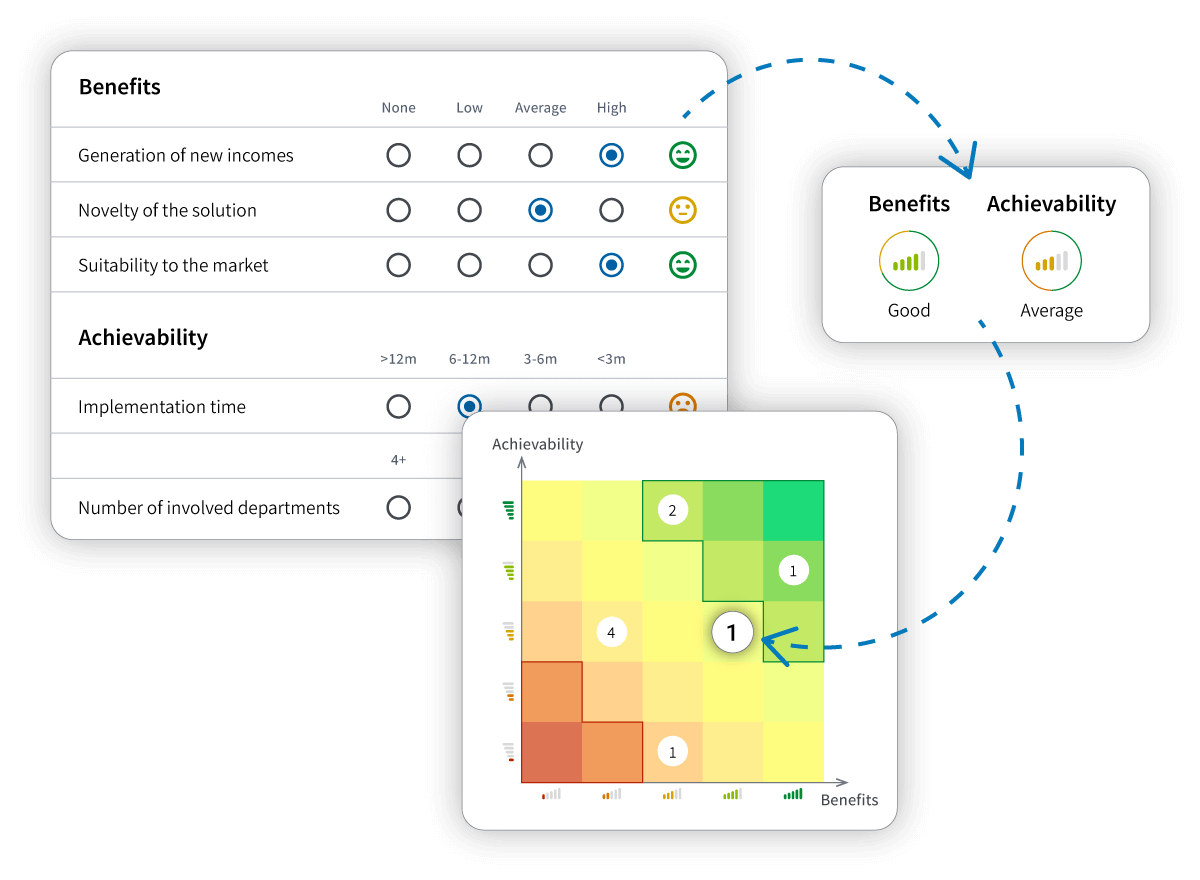
One of the major contributions of governance is the ability to establish objective criteria for selecting and prioritizing projects.. Based on transparent and shared processes, governance allows for arbitration between short-term needs and long-term ambitions, while taking resource constraints into account. This prioritization promotes optimal allocation of resources and maximizes the value generated by the portfolio.
Monitoring and control
Rigorous project monitoring is a pillar of governance. The use of key performance indicators (KPIs), dashboards, and reporting mechanisms makes it possible to measure progress, identify discrepancies, and take corrective action in real time. Feedback loops built into governance promote organizational learning and continuous process improvement.

Governance practices and adaptation
Standard governance practices
Organizations often rely on recognized frameworks, such as those proposed by the Project Management Institute (PMI) or Prince2, to structure their portfolio governance. Establishing a PMO (Project Management Office) dedicated to the portfolio allows for centralized supervision, harmonization of practices, and consistency in decision-making across the organization.
Cases encountered in organizations
Case 1: “Chief-based” governance (personalized, non-transferable)
In some organizations, governance relies on a charismatic leader. It all depends on his presence and his method. When he leaves, the governance structure collapses, because the other leaders do not adopt a system that is not their own.
Solution: : It is better to formalize the leader’s tacit knowledge by documenting the implicit rules of decision-making (criteria, frequency, trade-offs) and making management routines visible. The goal is to transform individual leadership into a transferable system.
Case 2: Governance that is not formalized or unsuitable for portfolios
Governance can sometimes be too uniform, without distinction between different types of portfolios (innovation, continuous improvement, strategy). This can result in processes that are too cumbersome for some projects and too vague for others.
Solution: : Adapt the standard to the context by identifying portfolio families and defining a streamlined or enhanced governance model for each (frequency, indicators, bodies). The goal is to standardize principles, not formats.
Case 3: Governance exists but the standard is rejected
An imposed governance model may not reflect the actual practices or culture of the organization, leading to passive resistance and a return to old practices.
Solution: : Treat governance as a product to be improved with its users. Set up structured feedback after each committee meeting to adjust the standard and make it a tool that serves everyone. The goal is to draw on collective intelligence, not coercion.
Case 4: Total absence of governance
In some organizations, there are no prioritization rules, no committees, and decisions are made on a case-by-case basis.. Projects move forward based on opportunity, depending on the good intentions of individuals..
Solution: : Start small by formalizing a simple initial body (monthly prioritization committee) and defining a minimum viable framework: roles, objectives, indicators. The goal is to move from chaos to gradual mastery.
Adaptation to organizational specifics
It is essential to adapt governance structures and processes to the specific characteristics of each organization: size, culture, sector of activity, etc. For example, a large industrial company may set up complex governance committees, while an SME will favor more agile and informal processes. Adaptation also requires the involvement of stakeholders and the consideration of feedback in order to continuously adjust governance mechanisms.
Challenges and best practices
The implementation of effective governance faces several challenges, including resistance to change, lack of clarity in priorities and insufficient training of teams. To overcome these obstacles, it is recommended to:
- Train and raise awareness among teams on portfolio governance;
- Actively involve stakeholders in defining processes;
- Communicate transparently about objectives and decision-making criteria;
- Implement appropriate and accessible monitoring tools.
Case studies and practical applications
Concrete examples
Several companies have successfully transformed their portfolio management through enhanced governance. For example, a multinational energy company has set up a centralized PMO, enabling it to standardize project selection and monitoring processes on a global scale. This approach has improved visibility across the entire portfolio, optimized resource allocation, and reduced the risk of budgetary drift.
In the public sector, one administration adapted its governance by establishing cross-functional steering committees, promoting collaboration between departments and aligning projects with public policies.
These examples illustrate the importance of governance tailored to the context and the added value it can generate. Ultimately, governance is an essential lever for successful project portfolio management. It ensures strategic alignment, prioritization, and rigorous monitoring of initiatives, while promoting resource optimization and continuous improvement.
Organizations wishing to strengthen their portfolio governance must adopt practices tailored to their context, actively involve stakeholders, and invest in team training. Well-designed and well-implemented governance is a key success factor in maximizing the value of project portfolios.
FAQ – Governance in project portfolio management
What is project portfolio governance?
Portfolio governance refers to all the structures, processes, and tools used to align projects with the organization’s strategy, optimize resource utilization, and maximize the value of investments.
Why is governance strategic for portfolio management?
It ensures consistency between projects and overall objectives, facilitates decision-making, improves transparency, and enables better management of priorities and resources.
What are the essential elements of good portfolio governance?
Appropriate structures (steering committees, PMO), clear prioritization processes, monitoring tools (KPIs, dashboards), and active stakeholder involvement are essential.
How can projects in a portfolio be prioritized effectively?
Using objective criteria, structured processes, and monitoring tools to arbitrate, measure progress, and adjust the portfolio according to internal or external developments.
What are the main challenges faced?
Resistance to change, lack of clarity of roles or training, and difficulty in involving all stakeholders. These obstacles can be overcome through training, communication, and continuous improvement.
What are the concrete benefits of strengthened governance?
Greater visibility on projects, optimal resource allocation, increased risk control, and enhanced adaptability, as demonstrated by numerous concrete examples in the private and public sectors.
Does governance promote agility and sustainability within the organization?
Yes, it supports organizational learning, continuous improvement, and the ability to adapt quickly to market developments or changing priorities.
What are the prospects for the evolution of portfolio governance?
The integration of digital transformation, agility, and management in uncertain or multicultural contexts are areas of research and improvement to be explored in order to enrich practices.